THINK about the technology you used at your last event. The registration platform. The matchmaking app. The event management system. Who built them? It was not a convention bureau, neither was it a hotel chain. Nor would it have been an established event management group.

Every major technological innovation that has reshaped how the MICE industry operates has come from outsiders. These are the engineers, developers and entrepreneurs who looked at our trade show floors and saw friction that we had stopped noticing.
Between 2020 and 2025, venture capital poured US$2.9 billion into event technology startups. Over 1,600 were funded. Two reached unicorn status, but the established players received none of that capital.
Instead, the investment world looked at our industry and said: The technological innovation is not coming from inside hospitality and events.
The Good News: They Want to Plug In, Not Take Over
The vast majority of these startups, however, are complementors, not competitors. They don’t want to run your events. They want to provide infrastructure and let you make your events meaningful.
An algorithm can optimise attendee matching based on 200 data points, but It cannot design the moment when two executives realise they should be working together. It cannot read the cultural context of a room in Bangkok differently from one in Sydney. Relationship expertise, cultural fluency, and experience design all remain firmly in the hands of events professionals.
The challenge is not that startups threaten your business. It’s that their technology can dramatically improve it, if you know how to integrate it
Evaluate Beyond the Demo
When a startup pitches you a sleek interface and impressive numbers, most event leaders ask: Does it look good? The better questions are architectural. Where does my attendee data live? Can I export it if I switch providers? Does this system talk to the three platforms I already run? What happens to my data if this company folds?
Technology vendors in Asia Pacific’s event space are multiplying fast. The ability to distinguish a well-engineered product from a polished prototype is becoming a core professional competency, not a nice-to-have.
Build Integration Capability
The real operational challenge is not adopting one tool. It comes from orchestrating many. Most event organisations now run registration on one platform, matchmaking on another, engagement tracking on a third, and post-event analytics somewhere else entirely. When these systems don’t communicate, you get data silos, duplicated workflows, and attendee experiences that feel fragmented.
More… EventCAT Gets Last Word at Tech Conf
Integration capability means investing in people who understand APIs at a strategic level: not writing code, but knowing what questions to ask. It means building internal processes for piloting new technology without disrupting live operations.
And it means treating your technology stack as a strategic asset that compounds over time, not a series of one-off procurement decisions.
Think Like a Venture Capitalist
Here is something counterintuitive from the startup world. Venture capitalists know they cannot predict which company will succeed. So they don’t try. They fund 50 startups to find five winners by making small early bets – then double down on what works.
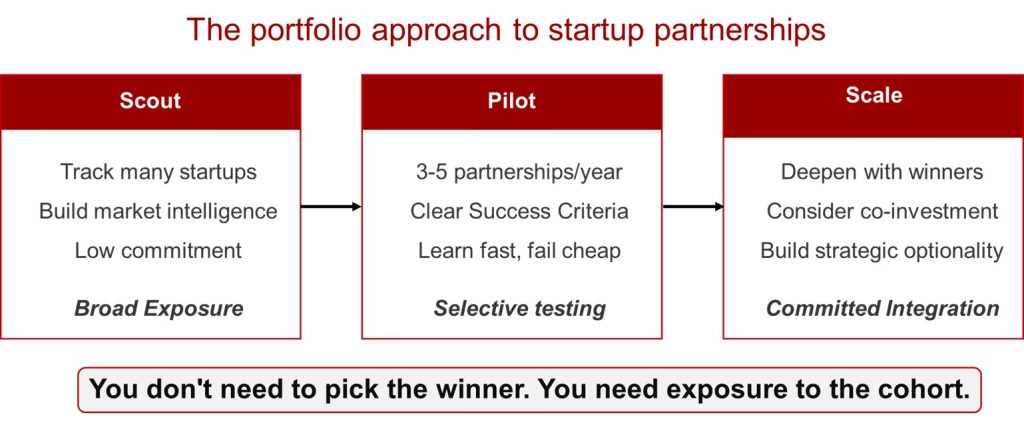
Event leaders can apply the same logic. Scout broadly: track emerging startups in your segment, attend demo days, build market intelligence.
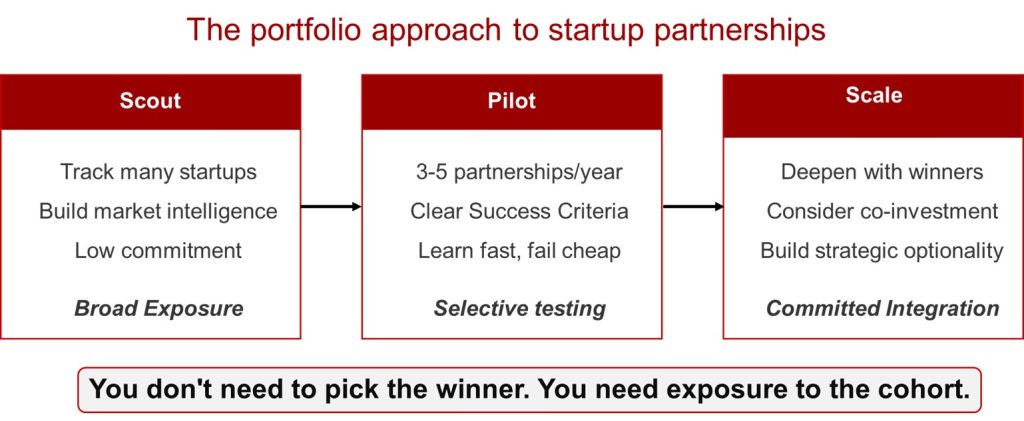
Pilot selectively: run three to five partnerships per year with clear success criteria. Scale with winners: deepen relationships with proven technology partners, and consider co-investment where it makes sense.
You don’t need to pick the winner. You need exposure to the cohort when the market crowns the winner
Invest in Tech Literacy Across Your Team
Operational excellence, that ability to execute a flawless event, is still essential. But it is increasingly embedded in software. What is rising in value is the ability to sit at the intersection of event expertise and technology fluency.
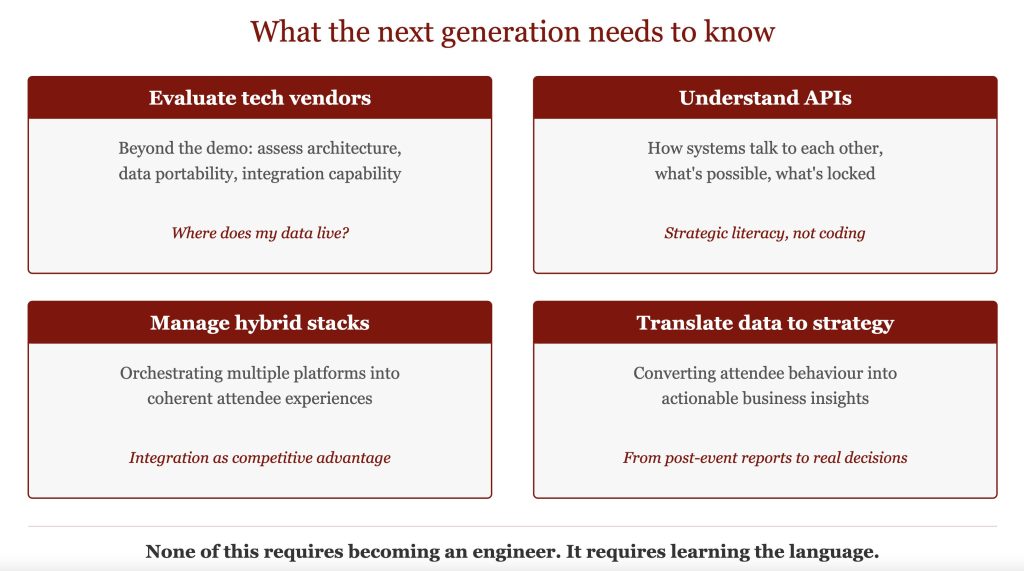
That does not mean your team needs to become engineers. It means they need to understand enough about data, platforms, and system architecture to make better decisions such as which vendor to trust, which integration to prioritise, which data points actually drive attendee outcomes.
The Question that Matters
In APAC, where event markets are growing and technology adoption is accelerating at an unprecedent pace, the competitive advantage will belong to those who can bridge engineering logic and event expertise.
The real question is not how to protect what you have or just how to adapt to new technology when it comes out. It is: who will you partner with to invent what comes next?
Simone Bianco is an assistant professor at Hong Kong Polytechnic’s School of Hotel and Tourism Management. He specialises in strategic management, startups and business competition across this field