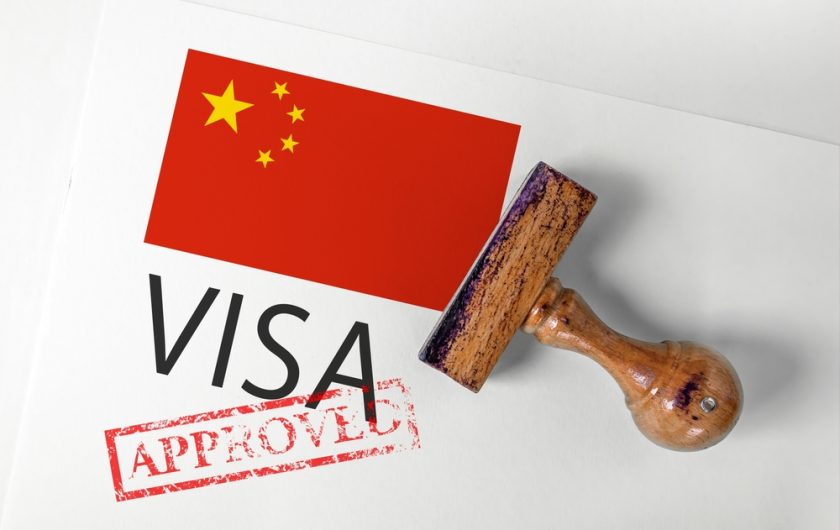
CHINA’S recent decision to grant visa-free treatment to citizens of the United Kingdom and Canada is the latest milestone in a sweeping national strategy to open its doors wider to the world.
Diplomatic gestures such as this usually follow high-level exchanges. But in this case recent visits by the British and Canadian Prime Ministers showed their strategic implications run far deeper.
This policy is not merely a diplomatic courtesy; it is a transformative move that promises to reshape global perceptions and create substantial economic opportunities. For Hong Kong’s Meetings, Incentives, Conferences and Exhibitions (MICE) sector, this is not just an opportunity; it is also a reason to reimagine its future.
There has been a great deal of disconnect between perception and reality in some Western societies. Misconceptions, ranging from unfounded concerns about product safety to sweeping generalisations about daily life in China, remain common.
The most effective way to counter misunderstanding is to invite the world to see for itself. This is the strategic logic underpinning China’s expanding visa-free policy.
Since December 2023, when China first introduced unilateral visa waivers for citizens of France, Germany, Italy, the Netherlands, Spain, and Malaysia, the program has steadily grown. Today, nearly 80 countries enjoy some form of visa-free access to the Chinese mainland.
The results are already tangible. In 2025, total entries and exits by foreigners reached 82 million, a year-on-year increase of 26.4 per cent. Notably, 30 million of these entries were facilitated by the visa-waiver program, a staggering surge of 49.5 per cent. These figures signal a robust recovery in inbound tourism and, more importantly, a pent-up global demand for business engagement with China.
The MICE Opportunity: A New Era of Regional Collaboration
For Hong Kong’s MICE industry, this unfolding trend presents a golden opportunity. As an international financial hub operating under the “one country, two systems” principle, Hong Kong enjoys a unique position. It blends a globally familiar legal and business environment with deep integration into mainland China’s economic fabric.
For international business travellers and conference organisers, Hong Kong can serve as the ideal “first stop”, which is a gentle, accessible introduction to the dynamism of the Greater Bay Area (GBA) and beyond.
More… China eases visa-free transit policy
However, seizing this moment requires more than passive optimism. It demands a coordinated strategy involving Hong Kong’s legislators, government agencies on both sides of the border, and private sector stakeholders. The goal is clear: to position the entire GBA as a premier destination for world-class events, with Hong Kong as the strategic entry point.
We need not look far for a model. The recent co-hosting of the National Games by Hong Kong, Macau, and several mainland GBA cities demonstrated what regional collaboration can achieve. Venues were shared, logistics were coordinated across borders, and the event showcased the region’s ability to work as one.
While the National Games drew predominantly domestic travellers, it proved a vital point: the infrastructure and willingness for cross-border event hosting already exist.
Now, imagine scaling that ambition. What if the GBA were to bid for something significantly larger? Perhaps the Asian Games? Such an event would not only fill stadiums but also hotel rooms, convention halls, and exhibition centres across the entire region. It would draw hundreds of thousands of regional and international visitors, injecting billions into the MICE and tourism economies of every participating city. The National Games were a dress rehearsal. The Asian Games could be the main event.
To turn this vision into reality, a multi-layered effort is required. Here is what each stakeholder group must bring to the table:
- Lawmakers must advocate for funding and policy support that enables Hong Kong to take a leadership role in regional bids. This includes pushing for streamlined cross-border movement of event equipment, talent, and attendees. They should also engage with GBA counterparts to harmonise event-related regulations, making it as easy to host a conference across four cities as it is in one. They can push for streamlined movement of event personnel, equipment, and financial flows across the boundary. Research shows that cumbersome systems and labour frictions weaken service outcomes; removing such barriers is essential for event competitiveness.
- Governments across the border must consider a joint GBA MICE task force, bringing together the Hong Kong Tourism Board, the Culture, Sports and Tourism Bureau, and their counterparts in Shenzhen, Guangzhou, and Macau. This task force’s mandate would be simple: identify major international events worth bidding for, coordinate infrastructure planning, and jointly market the region as a single, seamless MICE destination. The success of the National Games proves this model works—it is time to apply it to the commercial events sector.
- MICE operators, including hotels, event organisers, convention centres, airlines, and travel operators must develop “Hong Kong + GBA” event packages that make it irresistible for international organisers to choose the region. This means offering combined venue deals, cross-city transport passes, and streamlined itineraries that allow delegates to experience the best of Hong Kong and mainland GBA cities in a single trip. Industry bodies like the Travel Industry Council and the Hong Kong Convention and Exhibition Industry Association should lead the charge in creating these offerings.
The Asian Games Vision: Thinking Big
The Asian Games represents the scale of ambition required. If the GBA were to co-host such an event, the benefits would cascade through every sector. Hotel bookings would surge not just for weeks, but for months of preparation. Convention centres would host accompanying business forums and trade fairs. International media coverage would showcase the region to billions, directly challenging the misconceptions that visa-free travellers are now being invited to correct.
This is not a fantasy. The region has the venues, the transport links, and the experience. What it needs is the collective will to bid boldly and the coordinated execution to deliver seamlessly.
Call to Action for Hong Kong
China’s visa-waiver program is more than a policy adjustment; it is an invitation to the world to discover the real China. For Hong Kong’s MICE industry, it is a call to action. By learning from the National Games and setting our sights on ambitions as grand as the Asian Games, we can transform our region into the world’s most dynamic event destination.
Roy Ying is a former professional conference organiser who lectures in event management and marketing at Hang Seng University of Hong Kong