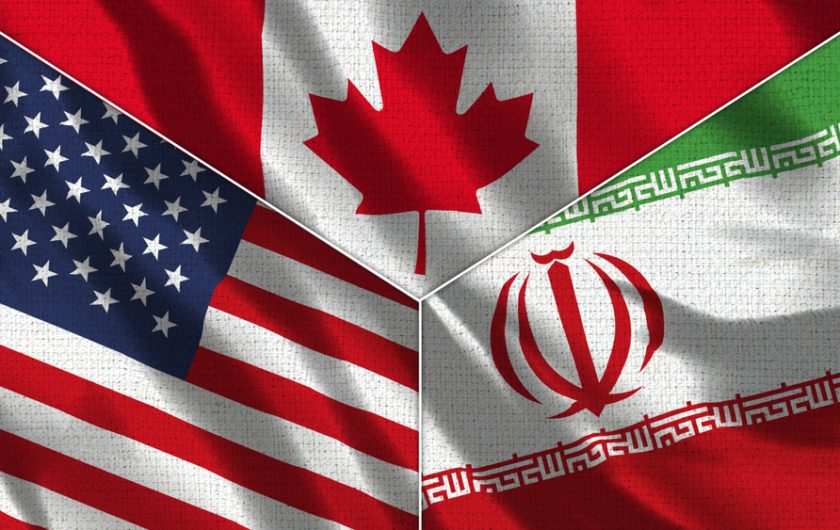
AS TENSIONS between the United States, Israel and Iran ripple through global markets, it is not only energy prices and shipping insurance that are being recalibrated. The latest research among incentive organisers indicates that the crisis surrounding the Strait of Hormuz is reshaping corporate travel sentiment.
 Canada has emerged as the clearest winner from current geopolitical disruption in incentive travel planning, with the Gulf States seeing the sharpest fall in confidence, according to the SITE Pulse Survey. The country had previously come in for derision from United States President Donald Trump over trade tariffs, its diplomatic relations with China and its national sovereignty.
The findings, released by SITE – the Society for Incentive Travel Excellence – show a rotation away from destinations perceived to be affected by conflict in the Middle East. In their place, organisers are favouring regions viewed as geopolitically distant, from the destinations embroiled in the conflict, politically predictable and operationally resilient.
Asia emerges early in the data as benefiting from this shift. Although a smaller sample compared to other SITE regions, respondents in Asia report a strongly positive inclination toward hosting incentive programmes within their own region, while also showing growing interest in Oceania and Southern Africa.
Asia scores a net +31 per cent among Asian respondents, with Oceania also positive at +19 per cent. Southern Africa, at +53 per cent, is the single highest sentiment score recorded by this group across the survey.
What we’re seeing is not a drop in demand for incentive travel, but a shift in mindset.”
– Melissa Moten, Vice President Experience & Event Solutions – BCD Meetings & Events & Chair of the SITE Research Committee

“Planners are highly attuned to global developments and are making thoughtful, strategic decisions about where to place their programmes. Destinations that are perceived as stable, accessible and aligned with client expectations are rising to the top,” Moten added.
The pattern suggests, organisers in Asia are either staying closer to home or deliberately selecting long‑haul destinations well removed from the Middle East. The Gulf States, by contrast, register a clear negative sentiment among Asian respondents, at -21 per cent.
SITE’s leadership says the results nonetheless highlight the resilience of the incentive travel sector, even in times of uncertainty, while making clear that destination perception is now being reflected in hard sentiment shifts across major source markets.
Incentive travel has always been both rational and emotional. Right now, the emotional dimension – how a destination feels in terms of safety, stability and alignment – is playing a more prominent role.
– Pádraic Gilligan, Head of Research & Consultancy at SITE

“What’s particularly interesting is how quickly sentiment can shift, and how clearly that shift is reflected in destination preference.
“For destinations and DMCs, the opportunity lies in understanding these signals and responding with clarity. Those who can position themselves as trusted, reliable and experience-rich will be best placed to capture demand as it reorients,” Gilligan said.
The survey comes amid mounting concern over the security of the Strait of Hormuz – a chokepoint for global energy supplies. The incentive travel business depends on the confidence that routes will remain open, that insurance costs will not spike, and that delegates will feel secure committing months in advance to premium programmes.
More… Meeting in US will not compute, say mathematicians
Across the survey, the Gulf States and neighbouring Northern Africa are the clearest casualties when it comes to sentiment among travel planners. The Gulf records the most consistently negative scores across all respondent groups, while Northern Africa is broadly unfavoured.
Europe and Canada, meanwhile, are the principal beneficiaries of this geopolitical sorting. European respondents report strong positive intent toward remaining within Europe (+54 per cent), while also rating Canada (+67 per cent), Central and South America (+56 per cent) and Asia (+31 per cent) favourably. The pattern suggests consolidation into destinations that feel politically stable and institutionally familiar, even if they are not inexpensive.
In the report, Canada attracts positive sentiment from European respondents and from the Rest of World grouping, which rates it at +46 per cent. In an environment where organisers are under increasing pressure to demonstrate duty of care to corporate clients, Canada’s reputation for stability appears to be translating directly into commercial advantage.
The United States, by contrast, is emerging as a more complicated proposition. American respondents themselves remain moderately positive about the US as a destination, scoring it at +23 per cent, largely because domestic travel offers a reliable fallback in uncertain times. Outside the US, however, sentiment is negative. European respondents rate the US at -19 per cent, Asian respondents at -33 per cent, and Rest of World respondents at -35 per cent.
The negative perception of the US among non‑American planners appears less about logistics and more about political association, reflecting unease with Washington’s foreign policy alignment amid the current crisis.
SITE’s latest Pulse Survey was conducted between March 25 and April 6. It gathered 193 valid responses from incentive travel professionals across the United States, Europe, Asia and a broader Rest of World cohort.